



Penn GSE Magazine Spring/Summer 2026
Front Lines of
Student
Mental Health
 Spring/Summer 2026
Contents







departments
/
News
New Federal Rule Threatens Graduate Access—and the Workforce Pipeline Schools Depend On
Dean Katharine Strunk
History Lesson
Looking Back at Almost 250 Years of Civics Education
Professor Jonathan Zimmerman
Alumni
Aishwarya Shetty, GED’23
Lindsey Jolyn Jackson, GED’12
Faculty Q & A
Noteworthy
Recess

Letter from the Dean

At Penn GSE, we often talk about education as a collective effort: one that requires not just great teachers, but strong systems of care, deep partnerships, and visionary leadership. In this issue, we highlight two communities whose work embodies this spirit: school counselors and our Philadelphia school partners.
School counselors support academic choices, nurture social and emotional well-being, and are often the first to notice when a student is struggling. They are the steady presence connecting homes, classrooms, and communities. They help young people make sense of their world and imagine futures they may not otherwise see for themselves. Yet far too many students go without this essential support. Nearly one in five attends a school without access to a counselor, even as the youth mental health crisis grows more urgent each year. In 2023, the CDC announced that 40 percent of high school students reported persistent feelings of sadness or hopelessness, up from 30 percent a decade earlier.
Penn GSE is preparing and supporting school counselors to answer this need. Interest in our programs is so strong that we were able to nearly double the 2026 incoming class of our Professional Counseling, M.Phil.Ed. program. I am inspired by the generations of counselors who have come through our doors, and I hope you will read about the impact of their work on page 16.
View from Campus

WHEN TALK IS ACTION
Learn more: discussphilly.org

FUTURE READY
More: penng.se/commencement26
News Briefs

Fighting Misinformation with FACTS
His Possibility Development Model is a five-step framework that supports individuals in identifying interests, setting goals, and following through on plans over time. It is designed to reduce barriers and guide adolescents on their path to adulthood. The program is expected to introduce the model to both high-potential students and school counselors from Uzbekistan, with a focus on supporting transitions from school to college and career.
Nakkula and Babson met with the ASEI team in Washington, D.C., in February. The collaboration will launch with a seven-day, on-campus program, starting July 25.

Lessons From Montgomery
Designed to expand leaders’ understanding of systems thinking, well-being, and grounded decision-making, the convening centered on immersive visits to the Legacy Museum, the National Memorial for Peace and Justice, and the Freedom Monument Sculpture Park. Thanks to Constance Clayton Professor of Urban Education Howard Stevenson and his brother, Equal Justice Initiative founder Bryan Stevenson, participants received rare access and guidance throughout the experience.
Together for Good

Build

The Latest
Collaborate

The Latest
Transform

The Latest
Elevate

The Latest

New Federal Rule Threatens Graduate Access—and the Workforce Pipeline Schools Depend On
 The Story
The One Big Beautiful Bill Act (OBBA), signed into law last July, contains provisions that reshape financial aid, including changes to federal student loan programs. These changes include the elimination of the Graduate PLUS Loan program, the longstanding federal funding for graduate students, and capping the amount of other loans—known as Direct Unsubsidized Loans—at either $100,000 for programs designated as “graduate” and $200,000 for those designated as “professional.”
In May, the Department of Education passed a proposal—part of its Reimagining and Improving Student Education initiative—that defines only 11 programs in specific fields such as law, medicine, and dentistry as “professional,” meaning that those seeking advanced degrees in others, such as education and nursing, would be limited to the “graduate” lifetime loan amounts.
 The expert

History Lesson
Judy and Howard Berkowitz Professor in Education
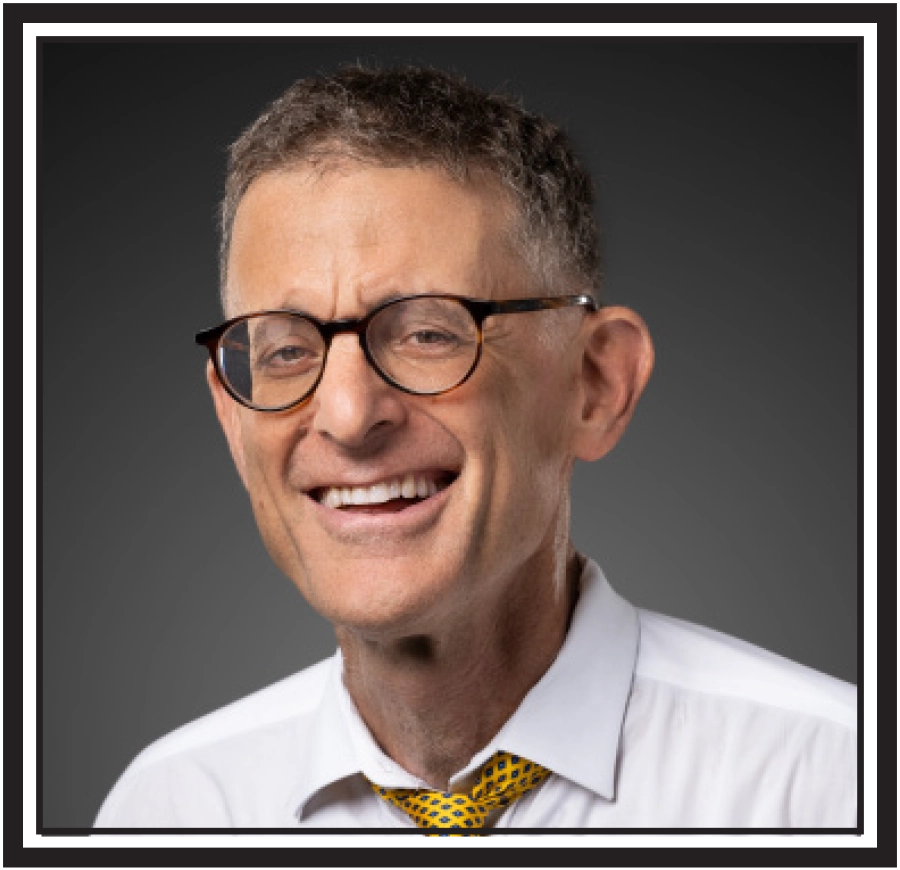
hould the public school teach us to respect our venerable American traditions, or should it teach every American to think for themselves?
It should do both, of course. We want our schools to bind us into a common nation, with a shared set of norms and values. But we also want the schools to cultivate independently minded individuals, with the will and capacity to come to their own reasoned judgments about the issues of their day.
That’s been a recurring tension across American history. Benjamin Rush, a Pennsylvanian who signed the Declaration of Independence, wanted schools to make young people into “republican machines” who gave automatic allegiance to the new nation. But Thomas Jefferson, the primary author of that same document, also thought future citizens should learn to safeguard their liberties against potential tyrants.
Faculty News

Published March 2026
Routledge
Published March 2026
SUNY Publishing
Published November 2025
Routledge
Sade Bonilla was selected as a Summer Scholar for the Postsecondary Education and Economics Research Center’s 2026 fellowship program. Her article, “Cultural Relevance at Scale: The Effects of an Ethnic Studies Expansion on Academic Outcomes,” (co-authored with Biraj Bisht, Grace Kim, and Emily Penner) is available in The American Educational Research Journal. She was also awarded an Arnold Ventures grant for the project “Funding Pathways to Success: The Policy Impact of Tuition-Free Dual Enrollment on Attainment and Workforce Preparation” with Daniel Sparks and Monnica Chan.
Ed Brockenbrough was awarded a Spencer Foundation Racial Equity Research Grant for his study, “Online Content as Sexuality Education Curricula for LGBTQ+ Youth of Color,” which explores the online sexuality education experiences of LGBTQ+ youth of color. He also recently appeared on the Teach the Babies podcast, where he talked about queerly responsive pedagogy and sex education, and the Ratchet Roundtable podcast, where he talked about Black queerness, safe spaces, and a pedagogy of the closet.
H. Gerald Campano was selected for the new class of American Educational Research Association (AERA) Fellows, honoring his exceptional contributions to, and excellence in, education research. He won the AERA Luis Moll Creative Work/Book Award, Division G, with María Paula Ghiso, GRD’09, for Methods for Community-Based Research. And he also released with his co-authors a policy brief, “Research-Practice Partnerships for Social Transformation: Democratizing Inquiry and Prefiguring More Just Scholarly Relations.”
MarÍa Cioè-Peña launched Racial Justice in Multilingual Education (RJME), an open-access, interdisciplinary journal, in collaboration with Penn Libraries. She also published “Ableism, Gentrification, and the Exclusion of Multilingual Learners with Disabilities from Bilingual Education Programs” in the Bilingual Research Journal; “Are we gentrifying? And if so, is that bad?” in RJME; and “Weathering the Storm” in Women and Therapy.
Serving Students in Conflict Zones
Aishwarya Shetty, GED’23

hen Aishwarya Shetty, a graduate of Penn GSE’s International Educational Development Program (IEDP) who delivers education to crisis zones, thinks about why her work matters, she returns to a moment in a camp for Afghan asylum seekers in Qatar. A teenage boy had a gun tattooed on his arm. She asked him about it. “I want to have the real one,” he told her. Why? “So no one can do anything to me.” The exchange crystallized a conviction she carries into every project: “No amount of literacy or numeracy outcomes matters if we aren’t using education as a tool to build a moral compass.”

Shetty also led a project-based learning initiative in India, reaching more than five million learners, and is piloting “Digi Wise” in Peru to strengthen critical thinking in the age of AI and social media. “What is common through all of it is to meet learners where they are, with what they actually need,” she said.
Homeroom

Photo: HKB Photography
indsey Jolyn Jackson never imagined she’d be on Broadway. A lifelong book lover who earned her master’s in the Reading/Writing/Literacy program at Penn GSE, she planned to be a literacy specialist. But shortly after her GSE graduation, the Debbie Allen Dance Academy–trained performer and Philadanco company member got a chance to audition for the big leagues.
“The only reason I came to Broadway was because my best friend left Philadanco to do The Lion King, and I was so sad to go on tour without him,” she said. “And he was like, ‘Then don’t. Come do Lion King instead.’”
She auditioned, earning a six-month contract to become a graceful gazelle in one of the longest-running shows on Broadway. She ended up staying for 11 years, sustaining one of the show’s iconic ensemble roles through major life changes: an engagement, marriage, earning a second master’s degree, and four pregnancies. (Her children Liv, 2, Shine, 4, and Action, 6, share the middle name Major in honor of their late brother.)
On the Front Lines of Student Mental Health
By Alyson Krueger, C’07
n the 10 years that Marissa Kimmel, GED ’16, has been a school counselor, her calendar has always been booked with student appointments. But in the last few years, the walk-ins have increased significantly.
It feels like a constant flow almost every day at the public high school in Delaware County, Pennsylvania, where she works, and her colleagues at other institutions report similar upticks. “I’ll have one or two student walk-ins on a good day who are looking for help with emotional regulation,” she said. “But on a busy day, we can easily have 10.”
“Sometimes I am in the middle of meeting one student, and I’ll have three who walk in who are upset,” she added.
Most of the issues relate to interpersonal skills or anxiety. “It just seems even things like making friends and keeping friends are really hard. They have a difficult time handling conflict,” said Kimmel. “Being able to organize themselves and figure out what to do has gotten worse since COVID.”
Catchment boundaries map
courtesy of Open Data PHLmaps
Leadership in Action
Philly Stakes:
When Partnership Becomes Practice
How Penn GSE and the School District of Philadelphia are co-creating solutions—in areas from algebra to AI—by listening first, aligning priorities, and turning research into real-time change across an urban school system.
n a Saturday in March at the University of Pennsylvania, about 20 math educators from the School District of Philadelphia (SDP) were watching a video of an Algebra 1 teacher encouraging his ninth graders to “think like mathematicians” and make connections between graphs and chunks of equations—part of a lesson on equivalent quadratic functions.
Catchment boundaries map
courtesy of Open Data PHLmaps
Designed to Serve, Built to Adapt

Designed to Serve, Built to Adapt

t has been a dark season for higher education. Declining birth rates after the 2008 financial crisis have led to a so-called “demographic cliff,” a dearth of 18-year-olds to fill the spots at the nation’s universities. Rising tuition costs and accelerating technological change spurred by AI adoption have fueled public skepticism about the value of a degree. And a president and Congress who have the sector in their crosshairs have made surprising sweeping shifts in federal research funding, international student visas, and student loan policies, causing uncertainty and confusion about the future.
But one silver lining among all these clouds has been community colleges. The National Student Clearinghouse Research Center data show that enrollment is up by 3 percent at those institutions this year. These colleges are creating new programs and credentials tied directly to local industry needs, offering affordable pathways to higher education, and innovating new supports for their students.
“There’s a lot of doom and gloom about higher education right now,” said Penn GSE Associate Professor Rachel Baker, who studies student access to and success in community college. “Higher education is not a monolith, and different sectors are hit differently in different economic times. I think many community colleges right now are okay.”
Thinking Outside the Bot: A Conversation with Bodong Chen & Seiji Isotani


hen Associate Professor Seiji Isotani—a leading expert in intelligent tutoring systems and educational technology—arrived at Penn GSE last summer, he was met by a campus that was already deeply invested in understanding, creating, and leveraging AI. Faculty members, like Associate Professor Bodong Chen, were creating web applications, curriculum, guidelines, research, and practical instruction for the emerging and rapidly changing technology. In fact, Chen had already proposed a new faculty working group where colleagues from across the School could gather to discuss and collaborate on artificial intelligence. It is just one of the ways Penn GSE faculty have taken on the ambitious charge of helping the School build a thoughtful, collaborative, and future-focused approach to AI.
This fall, Chen’s brainchild, now known as the AI Thinkery, launched. It is designed as a rare kind of space—one that slows down the constant buzz of innovation long enough for faculty from across disciplines to actually think together. The group is already sparking new research ideas, shaping institutional strategy, and giving Penn GSE a powerful voice as the University defines its own AI priorities.
We sat down with Chen and Isotani to talk about the Thinkery, their new cross-campus projects, and why thoughtful friction—not frictionless efficiency—might be the key to learning in the age of AI.

Alumni Notes
-
At Penn, all alumni have an affiliation—a series of letters and numbers following their name to indicate their degree, school, and year of graduation. A master’s degree from Penn GSE is represented as GED and an education doctorate as GRD. A philosophy doctorate from any school at Penn is represented as GR. An undergraduate degree offered by the School of Education until 1961 is represented as ED. The two numbers following the letters represent the year in which that degree was completed.
 Denotes alumni authors whose latest book is featured on the alumni bookshelf.
-
1970s
- Joanne Linowes Alinsky, GED’71, was inducted in Marquis Who’s Who in America. In January 2026, she was awarded the first Dorwin Thomas Lifetime Service Award to honor her extraordinary dedication, leadership, and long-standing service to Design-Build Institute of America New England and the design-build community.
- Bonnie Botel-Sheppard, CGS’74, GED’76, GRD’81, is delighted to still be contributing part time to the Penn Learning Network (PLN) with special emphasis on PLN faculty support and early childhood education.
- Leticia C. de la Rosa, GED’74, retired after teaching social science for 27 years in the Philippines. She recently celebrated her 100th birthday.
- Cecelia Evan, GED’76, GRD’85, age 92, enjoys drawing and spending time painting (watercolor and acrylics) abstracts with her daughter, granddaughter, grandson, and two great-grandsons.
- Laurence Kahn, C’69, GED’71, founded the nonprofit Help Now! Advocacy in 2004. The organization’s nationally unique services assist individuals and families, free of charge, in resolving a myriad of life-altering crises. Since its inception, its advocates have assisted approximately 13,000 individuals and families.
- Carol Parlett, GED’78, received an Award for Excellence from the Mid-Shore Council on Family Violence for 22 years of board service.
- Shelley Wepner, GED’73, GRD’80, received the American Association of University Administrator’s 2025 Neuner Award for Excellence in Scholarly Professional Publication (with Bill Henk and Heba Ali) for their article, “Examining Chief Academic Officers’ Reasons for Remaining or Exiting their Positions,” which was published in the Journal of Higher Education Management, Volume 1.


4 Tips for Teaching Algorithm Auditing to Help Students Detect Bias in AI Outputs
s students integrate AI into their learning at an increasingly rapid pace, they need the tools to critically assess the outputs it provides—and how much they can trust them. That’s where algorithm auditing comes in.


Yasmin Kafai
Lori and Michael Milken
President’s Distinguished Professor
A leading learning designer and researcher, Kafai worked with Danaé Metaxa, the Raj and Neera Singh Term Assistant Professor in Penn Engineering’s Computer and Information Science department, to develop the AI Auditing for High School toolkit to help teachers introduce students to algorithmic bias and guide them through hands-on audits of real-world AI applications. Until very recently, she explained, most people thought that AI systems were too complex for the average person to understand how they work, and thus potential algorithmic bias was a fact of life.
“But algorithm audits have actually shown that you don’t need access to the algorithms, you don’t need access to the data used to train the system,” she said. “By just systematically investigating or auditing different inputs, you can see what kind of output the system generates, and then with some simple statistics you can make a judgment call: Is this biased or not?”


Masthead
The Penn GSE Magazine is produced by the University of Pennsylvania Graduate School of Education, 3700 Walnut Street, Philadelphia, PA 19104. Reproduction of these articles requires written permission from Penn GSE. ©2026 by the Trustees of the University of Pennsylvania. Please contact Penn GSE at (215) 573-6623 or alumni@gse.upenn.edu for references or to update your address.
Katharine O. Strunk
Dean
William Parker
Vice Dean, Marketing and Communications
Rebecca Raber
Editor
Jane L. Lindahl, GED’18
Assistant Professor Linda M. Pheng
Professor of Practice Anne Pomerantz
Jordan Tegtmeyer, GED’08, GRD’21
Senior Lecturer Caroline L. Watts
Contributors:
Matt D’Ippolito; Hassan Javed, GED’27;
Nada Khan, GED’26; Alyson Krueger, C’07; Lini S. Kadaba; Jennifer Moore; Kat Stein
Designed by Bold Type Creative
Copyedited by Colleen Heavens
Board of Advisors
Jeffrey S. McKibben, W’93, Chair
Olumoroti G. Balogun, GED’19, GRD’20
Brett H. Barth, W’93
Allison J. Blitzer, C’91
Harlan B. Cherniak, W’01
Jolley Bruce Christman, GED’71, GR’87
Webster B. Chua, W’04
Beth S. Ertel, W’88, WG’92
Evan S. Feinberg, W’09
Elizabeth A. Goldhirsh-Yellin, C’00
Patricia Grant, GED’01, GRD’04
John A. Henry
Alexander B. Hurst, C’01
Heather Ibrahim-Leathers, W’95
Janelle Lin Zimmerman
R. Neil Malik, ENG’92, W’93
Gregory A. Milken, C’95
Vincent Montemaggiore, ENG’00
Mindy E. Nagorsky-Israel, C’94, W’94
Andrea J. Pollack, C’83, L’87, GED’17
Lindsay G. Ramsay, C’05
Francisco J. Rodriguez, W’93
Molly P. Rouse-Terlevich, C’90, GED’00
Michael J. Sorrell, GRD’15
Navin M. Valrani, W’93, GED’18, GED’22, GRD’23
Steven M. Wagshal, W’94
