

A Worldwide Web
Penn GSE professors and programs are engaged in more than 150 international partnerships and projects in more than 60 countries around the globe. The goal? To change the world through education.
By Rebecca Raber
ne wall of Ameena Ghaffar-Kucher’s office is covered by a large, colorful map of the world. As director of Penn GSE’s International Educational Development Program (IEDP), her choice of office artwork isn’t surprising. Her program’s mandate is to teach students to understand the complex relationships between local and global political, economic, and cultural dynamics and their impacts on education systems, so she is always thinking about the international community.
“We are the most internationally diverse program at GSE,” said the senior lecturer. “Every year, we have at least a dozen countries represented, and those dozen countries change every year. I would say our students have come from 30 or 40 countries, easily.” She then rattled off a list of 34 of them—from Malaysia to Mozambique—off the top of her head.
The particular map Ghaffar-Kucher has chosen to display in her office, however, offers a new perspective on the world. Known as the “What’s Up, South?” map, it depicts the north at its bottom, giving an “upside-down” view of the earth’s continents, with Australia and South America at the top and Africa at its center. Since most maps have traditionally been drawn by European and North American cartographers, they have emphasized the geography of their creators. But this map, though still imperfect—“Africa should be much larger,” said Ghaffar-Kucher—offers a new way of looking at the world. And that’s the aim of her program.
Where in the World is Penn GSE?
A key priority in Penn GSE’s strategic vision, Together for Good, emphasizes collaboration with local, national, and global communities. To further this, the Global Engagement Office, led by Senior Fellow Alan Ruby, recently launched a five-year strategy, building on over 150 international activities and partnerships from the last academic year. The plan aims to advance meaningful research, quality education, and increased capacity for international service.
Technology, trade policies, and political transitions have highlighted the interconnectedness of the global community, said Ruby, and a school like Penn GSE that is committed to consequential research and real-world impact must, therefore, engage in work beyond its borders.
“There’s no doubt that we live in a globally connected world—that’s been true now for a long time,” said Sharon Wolf, C’07, an associate professor in the Human Development and Quantitative Methods division. “We can’t think of our education systems in isolation. The education of children around the world has direct impacts, actually, on us. . . . We also have so much to learn from other countries and what they have figured out through their own education systems.”

Research Partnerships in Action
in West Africa
An applied developmental psychologist, Wolf has spent years conducting research on early childhood education in West Africa. Her local partners have included the Ministry of Education and Literacy in Côte d’Ivoire (for a study on improving learning outcomes and reducing child labor) and local nonprofits in Nigeria like the Centre for Girls Education (to explore if a rural girls’ preschool program can improve primary school enrollment and reduce child marriage prevalence) and Aid for Rural Education Access Initiative (to research the efficacy of their instructional program in internally displaced people camps). These local partnerships are critical for successful scholarship, she said.


Those local partners, added Wolf, are the experts in their own people and systems, and they best understand how to design a successful study in their regional context. For example, Wolf had designed a waitlist-control study for an education program in internally displaced people camps in Nigeria. The design meant children in the control group wouldn’t receive any programming during the study period, but would receive the educational programming when the study ended. But her local collaborators felt strongly that it was immoral to withhold services from children who have no other access to education and few other ways to pass the time constructively.
“So we decided to design a program that was not related to academic skills, but more to life skills, for the control group to be implemented during the study period,” said Wolf. “At the end of the study, the children who received the education program will also receive the life-skills program. We needed to design the study in a way that would keep the integrity of the intended study and be ethical and responsive to the children participating. And there are nuances I cannot understand while sitting in West Orange, New Jersey.”
That is another reason why Wolf is also passionate about making sure those studies also have co-investigators from the areas they are researching.
“In the work I’ve been doing, especially over the last decade, I’ve been increasingly interested in making sure all of our projects have local co-investigators who are meaningfully leading parts of the work, and in mentoring and growing more researchers,” she said. “In Ghana, there are so many talented young scholars, but they don’t get opportunities to work on a lot of these large projects, and so we’ve been trying to really change that, too.”
Wolf isn’t alone. This kind of collaborative partnership—one where the professor conducts research with global partners not to them or for them—is the goal of all Penn GSE researchers.
“We’re not going to fly in, do the work, and go,” said Ruby. “We’re going to work with you. We’re going to define the problems together and construct the research together. We’re going to interpret it together. We’re going to publish it together. These are important qualities to the relationship. It’s not exploitive, it’s collegial, and that’s really important. Otherwise, you’re not going to have sustained and enduring impact, which is something that we’re interested in.”
Addressing Teacher Needs
in Argentina
Anne Pomerantz, a professor of practice in GSE’s Educational Linguistics division, is similarly inspired by her partners. Her most recent project was brought to her by one of them, Mariel Doyenart, director of ICANA, a binational nonprofit promoting exchange and cooperation between Argentina and the US, in collaboration with the Buenos Aires Ministry of Education. Together, the team—which also includes her GSE colleagues Catherine Box and Betty Chandy—is working on an accelerated, hybrid-online certification program for aspiring English teachers that would get high-demand language teachers into classrooms more quickly.
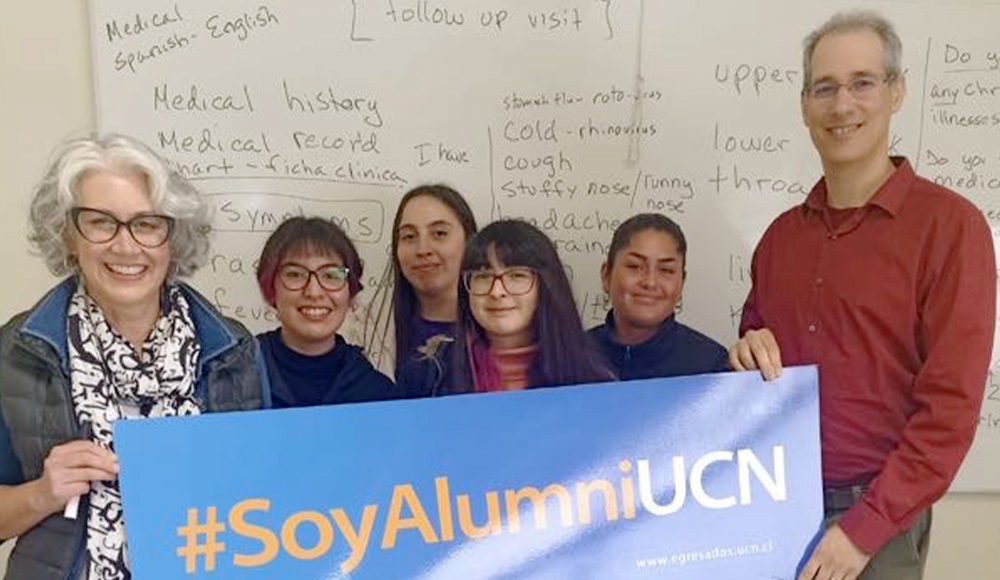
Another area of Pomerantz’s international research, also a partnership with Box, brought her to Chile to help university professors across disciplines—from computer engineering to forestry and medicine—teach their courses in English when they and their students are not native English speakers. This work was necessitated by the primacy of English in academic and technical publishing.
“Almost every country in the world has an economic development strategy that involves language education,” said Pomerantz. “Given the rise of English as the lingua franca of so many fields—business, technology, medical research, hospitality, higher education—that strategy often includes a strong desire for and investment in English language instruction.” Because of that, there are implications for her research beyond the countries where it is conducted.
Studying Child Development
in China
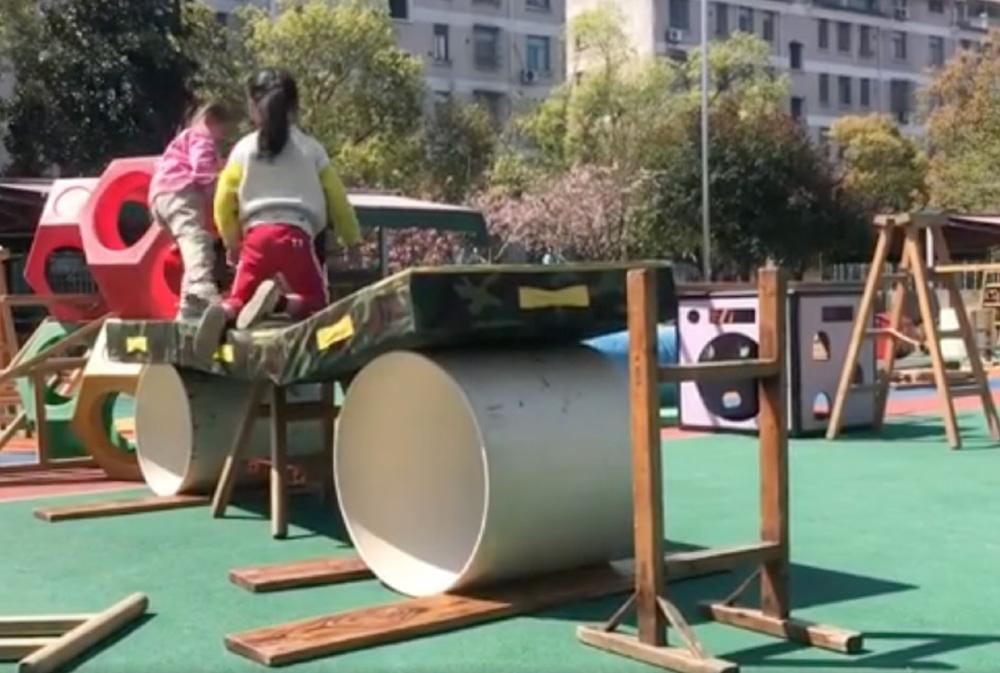
“Typically, the schools in Asia are very structured,” he said. “But the overall idea of Anji Play is to let children play freely. And so, what are they learning? Skills of social interaction, developing self-confidence, increasing their creativity? We need the data.”
Chen said that, though there has been rapid expansion of Anji Play (in China, Malaysia, Hong Kong, and even the US), there hasn’t been much empirical research assessing its outcomes. So he and his team from both Penn GSE and Shanghai Normal University aim to collect data on roughly 600 children in one branch of Anji Play in Zhejiang, China, starting this summer.
The hope is that, after following these children for three years, this research can inform refinement of Anji Play’s practices, making them more effective and adaptable to different educational contexts, and offer insights into how the model can be adapted and implemented in diverse cultural and educational settings.

Education Innovation
in Beijing

“The certificate program builds education knowledge, business and design skills, and entrepreneurial mindsets so that students are well-positioned to imagine, design, and create the future of learning,” she said.
This year, her team will deliver a certificate program to a group of teacher leaders at Beijing Normal. This will mark the first step in a new multi-national partnership that Zapf hopes will eventually include in-person seminars and workshops on each campus, as well as a possible joint degree and integrated certificate program in education entrepreneurship with SFD.
“This partnership will provide an exceptional opportunity for two leading education schools to work on pressing issues in schooling across our countries,” said Zapf.
The reason so many at Penn GSE, like Zapf, are engaged with work beyond the confines of their own country is that those pressing issues, in many cases, are universal and intertwined. Research and enterprises that are attempting to make big changes require a spectrum of stakeholders, perspectives, and experiences.
“The problems that we are trying to solve—from climate change to college access to quality pre-K—and the urgency of those issues means we need to work together,” said Zapf. “It makes us so much stronger when we’re learning from each other and building solutions together.”
Empowering Literacy Education
in Mexico
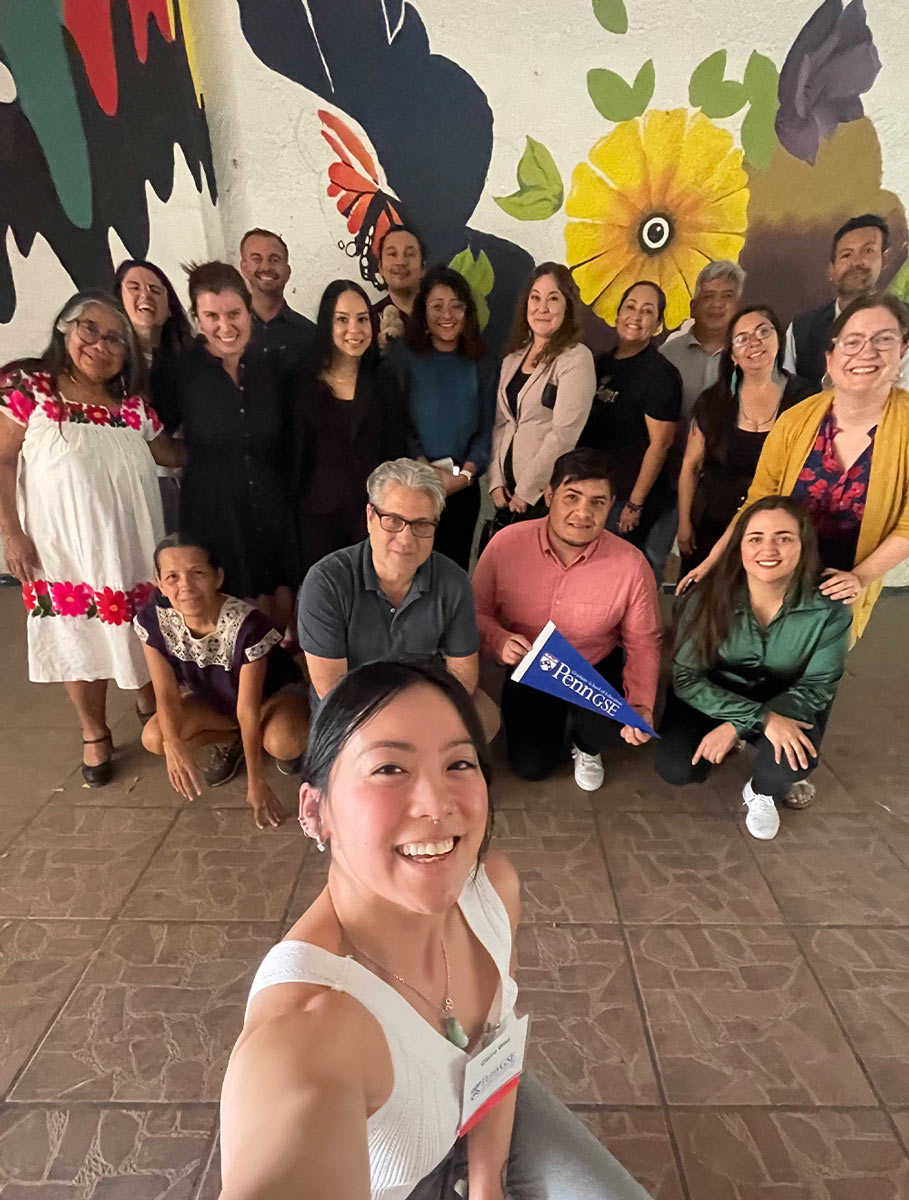
“One of the things I think that’s powerful in Mexico is that the big public universities have oversight of a lot of the public schools, so they actually can play a big role in changing policy,” said Campano. “University of Guadalajara is charged with supporting roughly 167 high schools across the whole state of Jalisco.”
That means that the university’s investment in literacy studies reverberates down to high school students in a more immediate way.
Expanding on their partnership with the University of Guadalajara last year, Campano, Ghiso, and Professor Manuel González Canché received funding from Penn Global to launch the Penn Educational Alliance for Change and Equity (PEACE) research institute, which uses youth storytelling to understand experiences, examine social inequities, and develop plans of action to improve education prospects. They frequently travel to Mexico for seminars, research, and fieldwork alongside Penn undergraduate and graduate students.
“We’re working with educators who are trying to think about how to address femicide in Mexico in the curriculum,” said Campano, explaining some of the ways storytelling is being used as a tool. “We have another teacher who is thinking about how the classroom can be more inclusive for members of Guadalajara’s Deaf community. We have another educator who’s working with internal migrants—Indigenous families who migrate within Mexico—trying to figure out how to support the education of this very transient community.”
This summer, the focus of their trip will be working with the teachers to make their work public, supporting them in writing academic articles about the work and impacting local practice and policy. Eventually, they hope to produce a book with these teacher-researchers writing different chapters in dialogue with one another.
Strengthening Higher Education Governance
Globally
He recently collaborated with the United Board for Christian Higher Education in Asia, an organization of 215 faith-based colleges and universities from countries such as the Philippines, Korea, Laos, and India, to enhance its governance practices and support their member institutions. He was also part of a team, alongside other Penn GSE faculty, including Professor and Board of Advisors Chair of Education Matthew Hartley, that helped to develop a new research-intensive graduate school of education at Nazarbayev University in Kazakhstan (NUGSE).
“We host NUGSE’s doctoral students for an eight-week dissertation seminar and do capacity-building work and other advisory services for them as well—everything from curriculum to strategic planning to performance metrics,” said Eckel. “They’re going through an internal restructuring right now of their graduate programs, so we anticipate being thought partners with them as they navigate and execute that.”
These kinds of partnerships helped Eckel identify a need in the higher education market outside the US—professionalizing the administration and preparing mid-level administrators and academics for leadership roles—which he has since created a new program at Penn GSE to address. The online Global Higher Education Management (GHEM) program, launched in 2023, takes advantage of technology to gather a truly international cohort of top experts in the field to address the sector’s evolving challenges.

But, he adds, that doesn’t mean he is trying to turn a global cohort of administrators into American-style deans and leaders.
“We want to make sure that we work with universities and their current and emerging leaders in ways that are going to best help the countries and context in which they’re operating,” he said. “Being able to understand the US but not see it as the only model, I think, is really important. We want to help people have the tools to have conversations within and across their local contexts. It’s a model that is built around meeting the needs of their society, informed by their local conditions and traditions, but also one with an eye to opportunities to expand and innovate.”
“Given the recent globalization of higher education, I believe the GHEM program is the most holistic and practical higher education master’s program on the market today,” said Josh Forman, GED’24, one of its first graduates. “Higher education institutions are not just competing with their neighbors today; they are competing with institutions all over the world. Understanding higher education in a global context, or simply in a context different from your own, is paramount.”

Bridging Theory and Practice
Across Global Communities

Students are expected to complete a semester-long internship at one of the 25 nongovernmental organizations the program has partnered with, from the United Nations Children’s Fund (UNICEF) to the Aga Khan Foundation. This immerses students in a real-world, para-professional experience. The hope, said Ghaffar-Kucher, is that the program is graduating students who understand different contexts, are flexible, and know how to ask good questions in service of social change through education for marginalized populations around the world.
“We want our students to be good thought partners and take guidance from the people they’re working with,” she said, “so that they’re working in community.”
One of the best ways to work in community is to learn to see thing from new perspectives—something the “upside-down” map that hangs in her office constantly reminds her. Like the program, she said, that map “aims to make the familiar strange, and the strange familiar.”